Prediabetes means your blood sugar is higher than normal but not yet high enough to be called Type 2 diabetes. Prediabetes symptoms are often mild or completely absent, so many people discover it only through a blood test. Under ADA criteria, a fasting plasma glucose of 100–125 mg/dL or an HbA1c of 5.7%–6.4% falls in the prediabetes range. The encouraging part is that this stage gives you time to act. Healthy eating, regular activity and medical follow-up can help lower the risk of developing Type 2 diabetes. This guide explains the signs, causes, test numbers and prevention steps in simple language.
Prediabetes is a condition in which glucose (sugar) levels in the blood are above the normal range but below the range used to diagnose diabetes. Doctors often call it a warning stage. Your body is having some difficulty managing blood sugar, but it has not yet reached the level of Type 2 diabetes.
Early detection matters because this is the stage where lifestyle changes and medical guidance have the most room to help. Prediabetes is also not entirely harmless. It is linked with a higher chance of developing Type 2 diabetes, and it often appears alongside other issues such as high blood pressure or abnormal cholesterol.
Many people feel completely well. Because blood sugar rises gradually, the body often adapts without obvious signals. That is why testing, rather than waiting for symptoms, is the main way prediabetes is found.
No. In prediabetes, blood sugar is raised but stays below the diabetes threshold. In diabetes, blood sugar has crossed that threshold and usually needs ongoing medical management. Prediabetes does not always progress to diabetes, but it does raise the risk. The comparison table later in this article sets out the differences.
Yes. Most people with prediabetes have no noticeable symptoms. It is commonly found during routine health checkups or when testing is done because of risk factors such as excess weight, family history or high blood pressure. A normal-feeling body does not rule out raised blood sugar, which is why risk-based screening is important.
Prediabetes often causes no obvious symptoms at all. When signs do appear, they tend to be subtle, easy to overlook and not specific. Tiredness, for example, has many possible causes. No symptom can confirm prediabetes on its own, and only laboratory testing can do that.
Some people may notice:
That last sign, known as acanthosis nigricans, is linked with insulin resistance. It is a reason to speak with a doctor, but it does not by itself confirm prediabetes.
In adults, the signs above may creep in so slowly that they are put down to age, work stress or a busy routine. Some adults also notice a gradual increase in waist size or stronger cravings for sweet foods. These changes can occur for many reasons.
Symptoms such as marked thirst, frequent urination and unexplained weight loss are more typical of diabetes than prediabetes. If you notice them, please see a doctor promptly rather than waiting.
Testing is usually guided by risk rather than symptoms. A healthcare professional may recommend a blood glucose or HbA1c test if you:
Guidelines differ on the age to begin screening and how often to repeat tests. Your doctor will advise what suits your situation.
Prediabetes usually develops when the body stops responding well to insulin, a hormone made by the pancreas. Insulin helps move glucose from the blood into your cells, where it is used for energy. When this process becomes less efficient, glucose builds up in the blood.
Think of insulin as a key and your cells as locked doors. In insulin resistance, the locks become "stiff," so the key works less well. The pancreas responds by making more insulin to push glucose in.
For a while, this extra effort keeps blood sugar near normal. Over time, the pancreas may struggle to keep up, and blood glucose begins to rise into the prediabetes range. This is why insulin resistance is so commonly linked with prediabetes. Excess body fat, especially around the abdomen, and low physical activity can make it worse.
The main risk factors for prediabetes include:
Having one or more risk factors does not mean you will develop prediabetes. It means testing is worth discussing with a doctor.
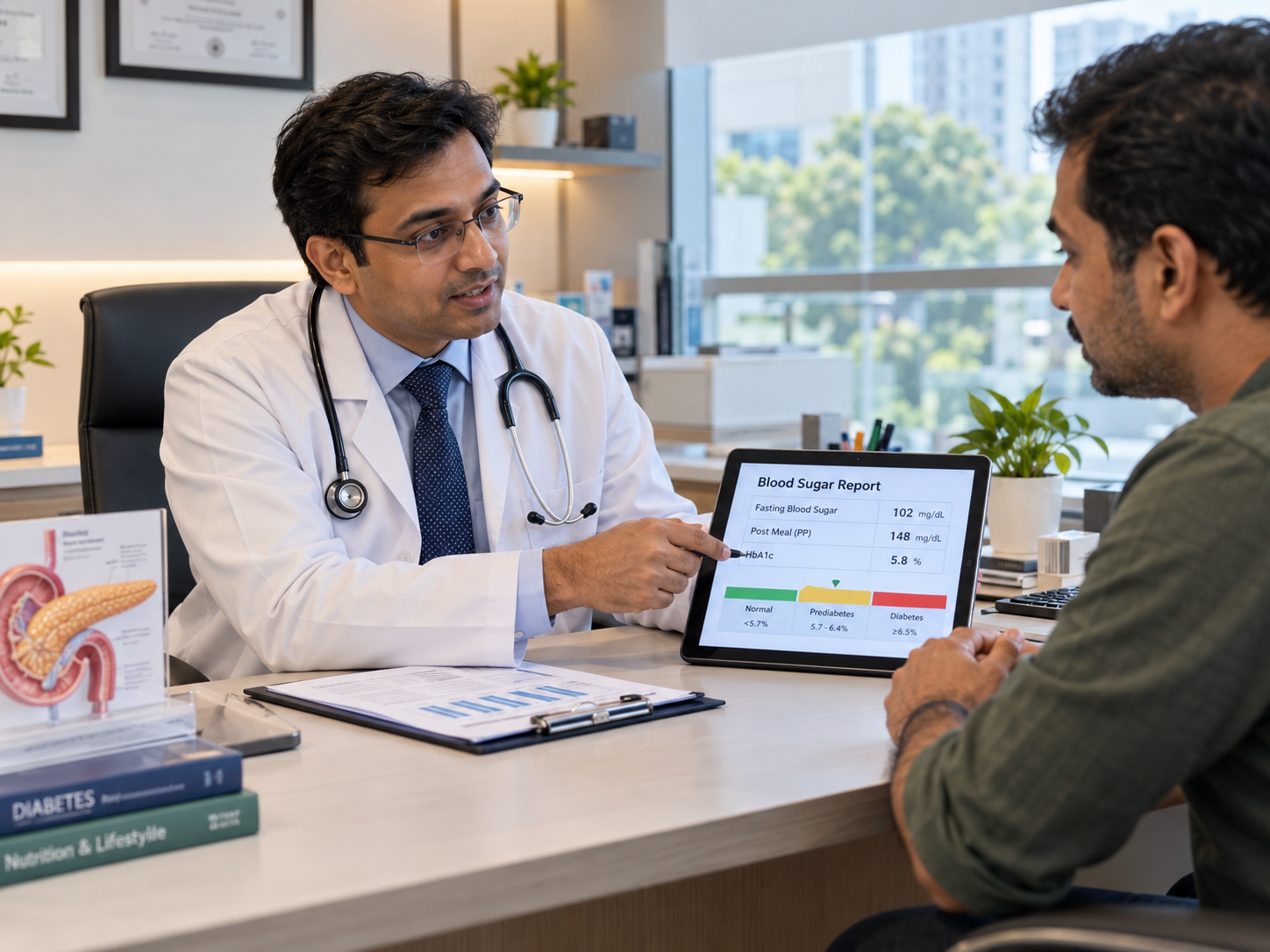
Two tests are most commonly used to identify abnormal blood glucose: the HbA1c test and the fasting plasma glucose test. The ranges below follow current ADA criteria.
| Test | Normal | Prediabetes | Diabetes |
|---|---|---|---|
| HbA1c | Below 5.7% | 5.7%–6.4% | 6.5% or above |
| Fasting plasma glucose | Below 100 mg/dL | 100–125 mg/dL | 126 mg/dL or above |
These numbers are for general understanding. Diagnosis must be made by a healthcare professional who considers your symptoms, medical history and the test method used. Abnormal results often need to be confirmed with a repeat test or a second type of test. A single home glucose meter reading cannot diagnose prediabetes or diabetes.
Some organisations use slightly different cut-offs. The WHO, for example, begins the impaired fasting glucose range at 110 mg/dL. Always interpret your result using the ranges your laboratory and doctor follow.
HbA1c shows your average blood glucose over roughly the previous two to three months. It does not require fasting, which makes it convenient. Certain conditions, such as anaemia or some inherited haemoglobin variants, can affect HbA1c accuracy. In those cases, your doctor may prefer a different test.
Fasting plasma glucose measures the sugar in your blood after you have not eaten or had caloric drinks for at least eight hours, usually overnight. It offers a snapshot of how well your body keeps glucose steady without food. Doctors may also use a two-hour oral glucose tolerance test in some situations. Your clinician will decide which tests are appropriate.
The main difference is how high blood glucose has risen and what that means for health risks and care.
| Feature | Prediabetes | Diabetes |
|---|---|---|
| Blood glucose (fasting, ADA) | 100–125 mg/dL | 126 mg/dL or above |
| HbA1c (ADA) | 5.7%–6.4% | 6.5% or above |
| Symptoms | Often none or very mild | May include thirst, frequent urination, fatigue, blurred vision, or none |
| Health risks | Higher risk of progressing to Type 2 diabetes; linked with heart and metabolic risk factors | Higher risk of complications affecting the eyes, kidneys, nerves and heart if not well managed |
| Management approach | Lifestyle changes, risk-factor management, and medical follow-up | Lifestyle changes, often with medication and structured long-term care |
| Importance of monitoring | Periodic testing to track changes | Regular monitoring of glucose, HbA1c and related health checks |
Prediabetes should never be dismissed as "just borderline." It is an opportunity to act early.
No single food or diet can cure prediabetes. The aim is a balanced, sustainable pattern of eating that supports steadier blood sugar and a healthy weight. Needs differ from person to person, so use these as general principles, not a personal meal plan. For related guidance, read about diet plans suggested by a diabetologist.
If you have other conditions, such as kidney disease, or take medication, ask your doctor or a qualified dietitian for tailored advice.
Learning how to control prediabetes mostly comes down to steady habits, supported by regular medical review.
Recommendations vary based on age, health status and risk factors, which is why personal guidance matters.
Some risk factors for prediabetes cannot be changed, including age, family history and a past history of gestational diabetes. But other factors can be influenced. Healthy lifestyle habits and good medical risk management can help reduce the chance of developing Type 2 diabetes. They do not remove the risk entirely for every person.
Practical diabetes prevention tips include:
Seek medical advice promptly if you develop severe thirst, very frequent urination, unexplained weight loss, extreme fatigue or persistent infections.
A diabetologist is a doctor who specialises in diagnosing and managing diabetes and related blood sugar conditions. Consider consulting a diabetologist in HSR Layout if:
A specialist can confirm your results, look at your overall risk and help you plan next steps. If you are searching for a diabetes clinic in HSR Layout, look for one that offers clear explanations, evidence-based guidance and regular follow-up.
Delta Super Speciality Clinic provides diabetes care in HSR Layout, Bangalore. [INPUT NEEDED: client to confirm each item below against the website before publishing.]
Prediabetes symptoms can be few, mild or entirely absent, which is why blood tests matter. HbA1c and fasting plasma glucose help identify raised blood sugar, and knowing your risk factors helps you decide when to get tested. Balanced eating, regular physical activity, healthy weight management and appropriate follow-up can all support diabetes prevention. Early attention to prediabetes gives you a real opportunity to act before Type 2 diabetes develops.
If you have a borderline result or several risk factors, you do not have to work it out alone. Consult an experienced diabetologist at Delta Super Speciality Clinic in HSR Layout for appropriate evaluation, personalised guidance and diabetes prevention support.
.png)
.png)