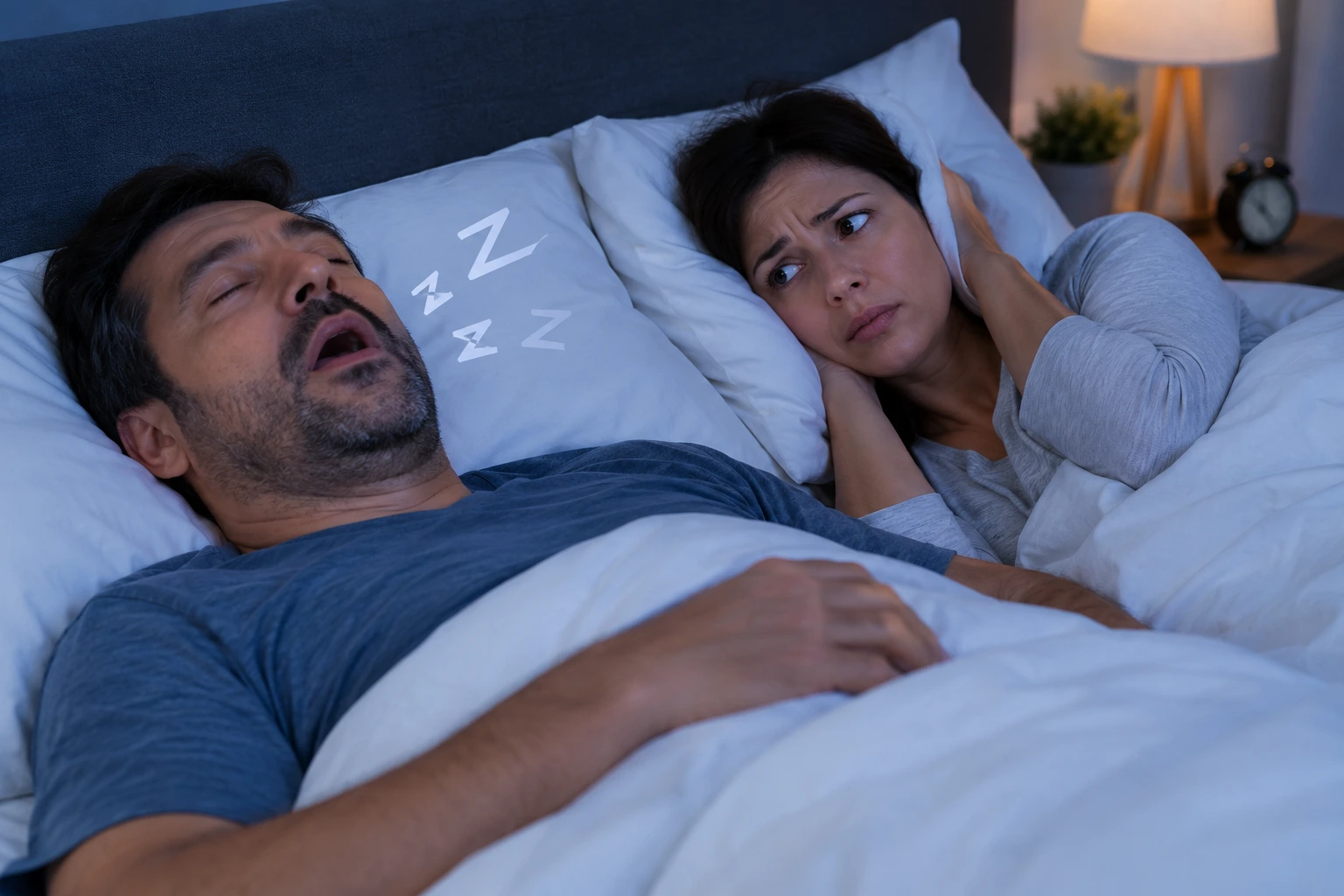
Sleep apnea is a sleep disorder in which breathing repeatedly pauses or becomes shallow during sleep. This breaks up your rest and can lower oxygen levels in the blood. Common early signs include loud snoring, gasping at night, morning headaches, daytime sleepiness and poor concentration.
If these sound familiar, consulting a neurologist in HSR Layout can help you work out whether your symptoms point to sleep apnea or to another cause. It can also help you decide on the right next step.
This guide explains the types, symptoms and causes of sleep apnea, and how it relates to brain health, heart health and diabetes. It also covers diagnosis, treatment and when to seek medical help.
Sleep apnea means “breathing that pauses during sleep.” In a person with sleep apnea, airflow is repeatedly reduced or stopped for around ten seconds or longer. These episodes can happen many times a night.
Each time, the body senses that breathing has been disturbed and briefly wakes the brain to restart it. These awakenings are usually so short that you do not remember them. But they fragment your sleep and can lower the oxygen in your blood.
Snoring and sleep apnea are not the same thing. Many people snore occasionally, for example with a cold or after a long day, and never have sleep apnea. Snoring becomes a concern when it is loud, frequent and comes with pauses in breathing, gasping or tiredness during the day.
Obstructive sleep apnea is the most common type. During sleep, the muscles at the back of the throat relax, and the airway narrows or closes. The chest and belly keep trying to breathe, but little air gets through. Loud snoring and gasping often follow.
In central sleep apnea, the airway is not blocked. Instead, the brain temporarily fails to send the proper signals to the breathing muscles, so there is no effort to breathe for a short time. CSA is less common and is often linked to other medical conditions.
Complex sleep apnea, also called treatment-emergent central sleep apnea, describes people who start with obstructive sleep apnea and then develop central breathing pauses once treatment such as CPAP begins. In some people it settles with time or with adjustments, which is why follow-up matters.
Recognising sleep apnea symptoms early can make a real difference. Common signs include:
Two points are worth remembering. Snoring alone does not confirm sleep apnea, and some people with sleep apnea do not snore noticeably.
Symptoms are also easy to miss, particularly if you sleep alone. You may only notice the daytime effects, such as tiredness, headaches or poor focus, and put them down to stress or a busy schedule.
The causes of sleep apnea differ between the types, and not every person has the same cause.
Factors that may contribute to obstructive sleep apnea include:
Central sleep apnea is usually linked to how the brain controls breathing. Possible contributors include:
A doctor needs to assess which factors apply in each case.
Your brain depends on good-quality sleep. It uses sleep to consolidate memory, manage emotions and recover alertness. In sleep apnea, repeated awakenings and dips in oxygen interrupt this process.
Over time, some people notice:
Researchers have also studied links between untreated sleep apnea and longer-term neurological and cerebrovascular risks, including stroke and cognitive decline. These are associations. They do not mean that every person with sleep apnea will develop memory loss or brain damage.
Because many of these symptoms have other causes too, persistent problems deserve a medical evaluation rather than guesswork.
The link between sleep apnea and heart health is well studied. Each breathing pause can cause oxygen levels to dip and the body’s stress response to switch on. Repeated night after night, this can strain the heart and blood vessels.
It is important to separate association from proven cause. Studies show that sleep apnea is commonly found alongside several heart conditions, but this does not mean it directly causes them in every person.
Obstructive sleep apnea is strongly associated with high blood pressure, including blood pressure that is hard to control with medication. Repeated oxygen drops and sleep disruption may keep the body in a state of heightened stress, which can raise blood pressure. If you are managing hypertension, you can read more on our hypertension care page.
Untreated obstructive sleep apnea has been associated with abnormal heart rhythms such as atrial fibrillation, coronary artery disease and heart failure. In people who already have heart problems, sleep apnea may make them harder to manage. Cardiology review is important when heart symptoms are present.
Obstructive sleep apnea is associated with a higher likelihood of stroke. Experts believe blood pressure changes, oxygen fluctuations and heart rhythm problems may all play a part. Stroke is also a condition that can affect breathing control during sleep, so the relationship can run both ways. Learn more about our stroke care.
Sleep apnea and diabetes often occur together, and each may make the other harder to manage.
Research suggests that obstructive sleep apnea is associated with insulin resistance, a state in which the body’s cells respond poorly to insulin. Fragmented sleep and low oxygen levels may also disturb the hormones that help regulate blood glucose. Poor sleep can further affect appetite and weight, which are linked to metabolic health.
The relationship works in both directions. People with Type 2 diabetes are more likely to have coexisting sleep apnea, partly because of shared risk factors such as excess weight.
This does not mean sleep apnea directly causes diabetes in everyone. But it is a good reason to raise sleep symptoms during diabetes care. Identifying and managing both conditions matters. See our diabetology services for related care.
Sleep apnea diagnosis starts with a conversation and examination, and often includes a sleep test. The right approach depends on your symptoms and overall health.
The doctor will ask about snoring, breathing pauses, sleepiness, headaches, medicines and existing conditions such as diabetes or hypertension. A partner’s observations can be very helpful. The doctor may also check your blood pressure, weight, neck size, nose and throat.
A sleep study, or polysomnography, is usually done overnight in a sleep laboratory. It records breathing, oxygen levels, heart rate, brain activity and body movements. It is often preferred when a person has other significant medical conditions or when central sleep apnea is suspected.
Home sleep apnea testing uses a simpler portable device. It may suit selected adults who are likely to have moderate to severe obstructive sleep apnea and no major heart, lung or neurological complications. A doctor decides whether it is appropriate.
The correct test depends on each person’s clinical condition. Do not self-diagnose from an app or wearable.
Treatment depends on the type, severity and underlying cause. The aim is to manage the condition and reduce its effects, but outcomes vary from person to person.
CPAP delivers a steady stream of air through a mask, which helps keep the airway open during sleep. It is a commonly used treatment for moderate to severe obstructive sleep apnea. Many people need time and support to get used to it.
These are custom-fitted mouthpieces that gently reposition the jaw or tongue to keep the airway open. They may help selected patients, such as those with milder disease or those who cannot tolerate CPAP, and are usually fitted by a trained professional.
Lifestyle measures can support treatment and may reduce symptoms:
These steps help, but they do not replace medical evaluation or prescribed treatment.
Surgery may be considered in selected patients, depending on the cause and severity. Examples include procedures to correct a structural airway problem. It is usually discussed after other options and is not suitable for everyone.
Consider seeing a neurologist in HSR Layout if you notice:
Not every sleep apnea case needs a neurologist. Depending on the findings, you may also be guided to a sleep medicine specialist, pulmonologist, ENT specialist or another professional. A neurologist can help assess brain-related symptoms and advise on appropriate next steps.
If you are looking for sleep disorder treatment in HSR Layout, an initial clinical evaluation is a sensible starting point, because treatment depends on the cause.
Call emergency services immediately for sudden weakness, facial drooping, speech difficulty or severe sudden headache. These are not signs to wait on.
Delta Super Speciality Clinic in HSR Layout offers neurology consultations alongside diabetology, endocrinology and internal medicine. This can be useful for people whose sleep concerns overlap with other health conditions. The clinic lists neurology care for stroke, headaches and related conditions, and has a page on sleep disorders.
Patients can expect:
Sleep apnea is more than a snoring problem. Early symptoms such as gasping at night, morning headaches, daytime sleepiness and poor concentration should not be ignored. Untreated, it may affect brain function and cardiovascular health, and it is closely linked with diabetes and blood pressure concerns.
Early diagnosis and appropriate treatment can help manage the condition. Regular medical review matters most for people with diabetes, hypertension or cardiovascular risk factors.
If you or a family member has possible sleep apnea symptoms, consider consulting a neurologist in HSR Layout for a proper evaluation.
Book a consultation with Delta Super Speciality Clinic in HSR Layout through our appointment page or contact us for clinical evaluation and guidance.
This article is for general education and is not a substitute for personal medical advice, diagnosis or treatment. Never change or stop prescribed medication without consulting your doctor.
.png)
.png)