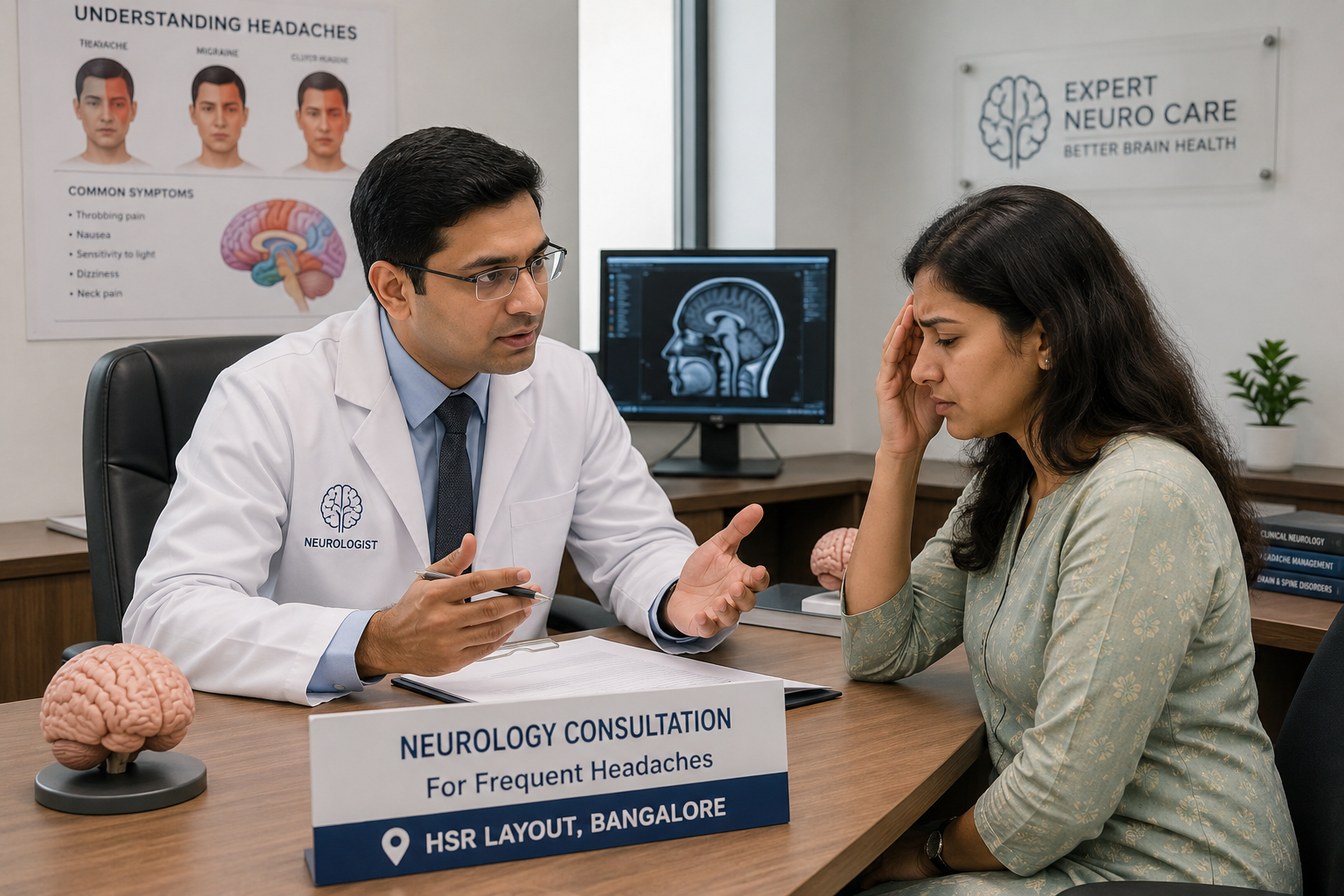
Almost everyone gets an occasional headache. But when headaches start showing up often, disrupting your work, sleep, or daily routine, they deserve closer attention. Frequent headaches can stem from everyday triggers like dehydration or stress, or from conditions such as migraine or tension-type headache. In some cases, they signal something that needs prompt medical evaluation. This guide explains common causes, key migraine symptoms, red-flag warning signs, and general treatment approaches, so you know when it's time to consult a neurologist in HSR Layout.
An occasional headache after a long day or poor sleep is usually nothing to worry about. Frequent or recurring headaches are different. They happen repeatedly over weeks or months and often follow a pattern in timing, severity, or triggers.
Frequency, severity, duration, and pattern all matter when a doctor evaluates a headache. A headache that occurs a few times a year is viewed differently from one that occurs several times a week. Tracking your symptoms, even informally, gives your doctor useful information during a consultation.
A frequent or recurring headache generally refers to headaches that occur repeatedly over time, following a pattern significant enough to affect daily life or warrant medical attention.
Frequent headache causes vary widely from person to person. Common contributors include:
Migraine is a neurological condition that causes recurring headaches, often on one side of the head. Common migraine symptoms include:
These are among the most common headache types. They typically feel like pressure or tightness around the head, sometimes described as a "band-like" sensation, and are often linked to stress or muscle tension.
Using pain-relief medicines too often to treat headaches can, over time, contribute to more frequent headaches. This is known as medication-overuse headache, and it's a reason why self-managing recurring headaches with over-the-counter medicine alone isn't always the right long-term approach.
Several everyday factors can contribute to recurring headaches, including:
Triggers vary from person to person, which is why identifying your own patterns matters.
Migraine symptoms can look different from one person to the next. They may include:
It's important to remember that not every headache with these features is migraine. Proper evaluation by a doctor helps confirm the underlying cause rather than relying on self-diagnosis.
Knowing when to see a neurologist for headache can help you get timely, appropriate care. Consider a consultation if you experience:
A neurologist evaluates your medical history, headache pattern, associated symptoms, medications, triggers, and performs a neurological examination to help determine the most likely cause and appropriate next steps.
Most headaches are not medical emergencies, but certain severe headache warning signs call for urgent medical attention.
A headache that suddenly becomes extremely severe, or reaches its peak intensity within seconds to minutes, should be assessed urgently.
Seek prompt medical care if a headache occurs along with:
A headache accompanied by fever and neck stiffness can indicate a serious underlying condition and needs urgent evaluation.
A new headache following a significant head injury should always be medically assessed.
A headache pattern that is new, persistent, or has changed substantially, particularly in older adults or when paired with other concerning symptoms, warrants medical evaluation.
These warning signs don't automatically point to a specific diagnosis. They indicate that prompt evaluation is the safer course of action. Pregnancy or the postpartum period also calls for appropriate medical assessment if a headache is accompanied by concerning symptoms.
Diagnosis typically involves a detailed conversation and examination rather than a single test. A neurologist may review:
Brain imaging or other tests are not automatically required for every headache. Your doctor may recommend further tests only if your symptoms, history, or examination findings suggest it's clinically appropriate.
Headache and migraine treatment depends on the underlying cause, frequency, and severity of your symptoms. There is no single approach that works for everyone.
General supportive measures often recommended include:
Doctors may recommend medicines for acute relief during an attack, or preventive medicines for people with frequent or disabling headaches. The right choice depends on individual diagnosis, frequency, and medical history. This is decided during a medical consultation and isn't something to determine on your own.
People experiencing frequent or disabling migraine attacks may sometimes benefit from preventive treatment after a thorough medical assessment. Preventive treatment isn't appropriate for everyone and is considered on a case-by-case basis.
A headache diary is a simple, practical tool that can help your doctor understand your condition more clearly. Consider recording:
This information can help identify patterns and support more informed, personalized care planning.
If you're searching for a neurologist in HSR Layout, consider scheduling a consultation if you experience:
For residents searching for a neurologist near HSR Layout or a headache specialist in HSR Layout, timely evaluation can help clarify the cause of your symptoms and guide appropriate next steps.
Delta Super Speciality Clinic offers neurological evaluation for people experiencing headaches, migraine, and related concerns in HSR Layout, Bangalore. Care is centered on:
Frequent headaches can have many possible causes, from everyday triggers like dehydration and stress to conditions such as migraine or tension-type headache. While migraine is one common cause, recurring headaches shouldn't be self-diagnosed. Recognizing severe headache warning signs, such as sudden extreme pain, neurological symptoms, or headache with fever and stiff neck, is important for your safety.
If your headaches are persistent, recurring, changing in pattern, or unexplained, medical evaluation can help identify the cause and determine whether further testing or treatment is appropriate. A qualified neurologist in HSR Layout can assess your symptoms and guide you toward suitable care.
If you're experiencing frequent, severe, recurring, or unexplained headaches, consider booking a consultation with a neurologist at Delta Super Speciality Clinic in HSR Layout for proper evaluation, diagnosis, and personalized care.
.png)
.png)